
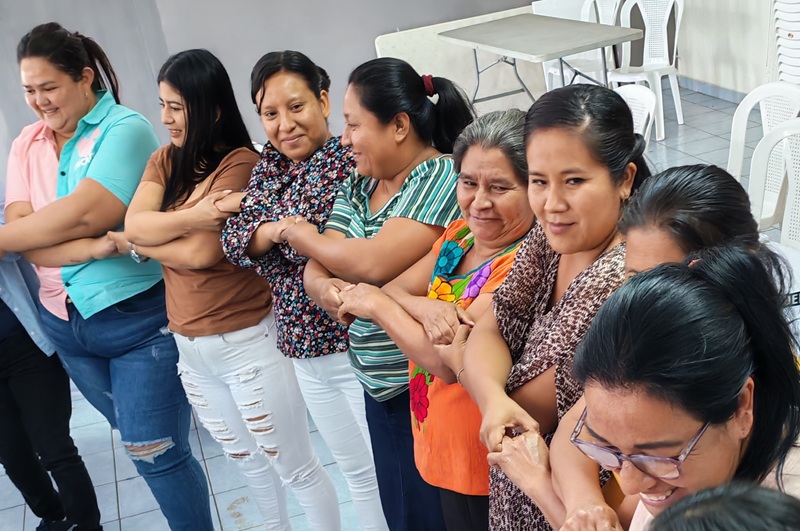
At Mary’s Pence, supporting women’s leadership means continuously evolving alongside the communities we accompany. In El Salvador, the ESPERA program is deepening its impact through new strategies that strengthen not only access to resources but also the long-term growth of women’s well-being and their small businesses.
As part of this work, the Mary’s Pence team in El Salvador has introduced Workshops for Women Entrepreneurs, a series of interconnected activities designed specifically for women entrepreneurs who are recipients of ESPERA loans to build individual capacity.
“Workshops for Women Entrepreneurs is a key element of our strategy for Economic Autonomy,” explains Mabel, our ESPERA Program Lead in Central America. “Our goal is for women to achieve economic independence and well-being, which allows them to exercise their rights and make decisions about their own lives.”
17 years ago, the ESPERA program focused on providing women with access to financial resources. Soon, we realized that access alone was not enough. “To achieve true autonomy, women need opportunities to reflect on their rights and build skills that strengthen decision-making,” Mabel explains. In response, we began offering emotional support through group workshops and also individual counseling. Building on this work, “These workshops encourage women to consider the role of gender in economic empowerment, helping them see their work not just as business, but as a pathway to autonomy.”
The workshops put these principles into practice, as shown by the experiences of women like Marcia. At 47, Marcia from Suchitoto once sold fried potatoes with money provided and controlled by her husband. Despite her hard work, she had no control over her earnings. After connecting with ESPERA, she accessed a loan and invested in her own business. Today, she sells sandwiches and other foods, manages her own earnings, and makes her own financial decisions.
To support the true empowerment of women, the program now includes three core workshops: Economic Empowerment and Gender, Marketing Tools, and Basic Administration.
These sessions reach approximately 70 women from organizations across El Salvador and will continue throughout the year. For many participants, this is their first experience in a program of this kind, and the response has been overwhelmingly positive. Women are gaining practical skills, building confidence, and strengthening a sense of community.
For Brenda, who co-facilitates the sessions alongside Mabel, the objective is both practical and transformative. “The goal is for women to identify the key characteristics of a successful economic initiative,” she explains, “while also recognizing the importance of promoting gender equality and understanding both the opportunities and limitations women face.”
Participants take turns leading sessions, sharing experiences, and strategies, creating a space for peer learning. They also gain concrete tools, such as templates and exercises, to plan strategies, track profits, and improve outreach, which they can immediately apply in their businesses.
The impact of this process is best understood through the stories of the women themselves.
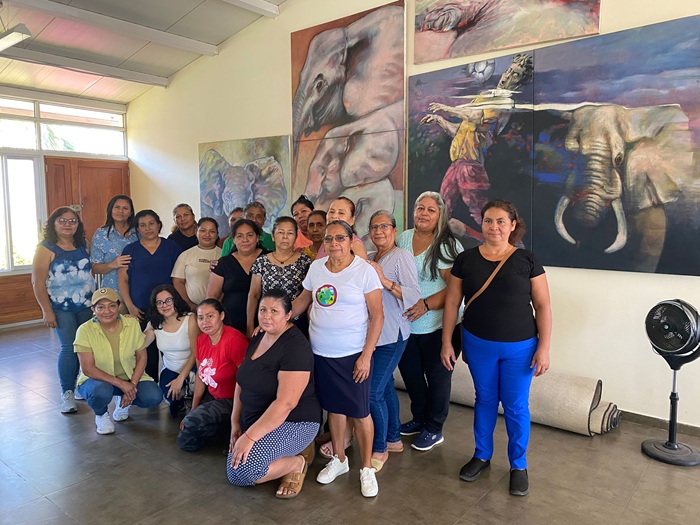
Marisol, 52, from Santa Rita de Casia parish, transformed adversity into opportunity. After surviving cancer and experiencing an accident that affected her mobility, she was denied employment. Using two walking sticks, she chose to start her own business. Through ESPERA, she accessed credit and began selling tamales. Today, she runs a pupusería and continues to grow her business with determination.
Heidi, 37, rebuilt her life after losing her husband, on whom she had depended financially. Encouraged by those around her, she started a business selling clothing, shoes, and accessories. ESPERA support helped her invest in and sustain her initiative while providing for her children.
These stories are just a few among many. As Brenda notes, sharing experiences has become one of the most powerful aspects of the workshops, fostering motivation, leadership, and connection among participants.
With the continued support of Mary’s Pence, women are not only accessing resources but also transforming them into lasting autonomy, resilience, and opportunity.