
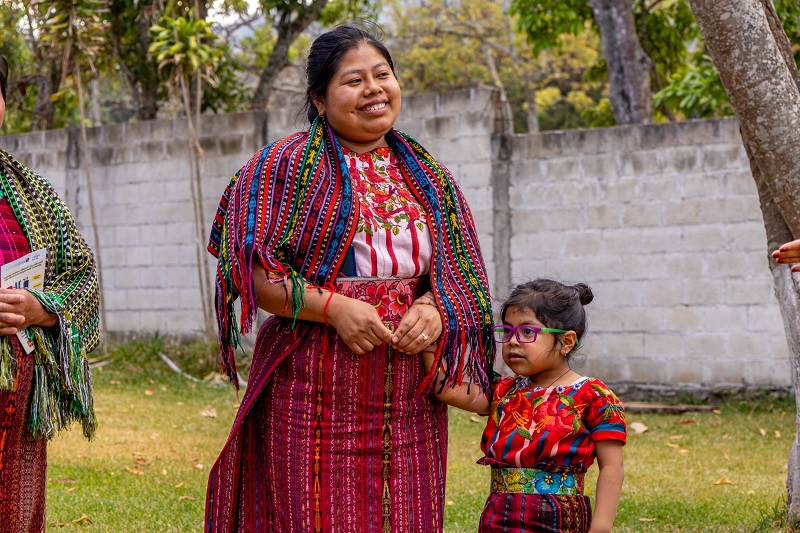
Reflections by Emily Monroe, Mary’s Pence New Executive Director
It was late morning in Suchitoto, El Salvador, and each of the women of the Local Leadership Council bent over a colored sheet of paper as they drew symbols that represented them. There were flowers, birds, trees, mothers holding hands with their children, winding rivers, and the most frequent symbol sketched on the bright paper squares: the sun.
The sun in Central America is not a distant companion in the sky; it is central to daily life. It is both life-giving, nurturing lush forests filled with tropical fruits, and dangerously oppressive during the dry season, scorching farmland and drying crops. Here, days are almost the same length year-round, and the predictable rising and setting of the sun creates a rhythm that matches domestic rural life. Waking up before dawn to grind the corn for tortillas, heat the coffee, wash the clothes, feed the chickens, prepare the kids for school. Before sunset, finish cooking dinner, collect the eggs, bring in the laundry, light the candles.
When we talk about economic empowerment for women in Central America, we don’t always talk about the hidden patterns and expectations women carry. We praise their achievements — saving up enough to send their kids to school, finishing their studies, or reaching a business milestone. Each of these feats is more of an achievement than we may realize, because behind the scenes, they are still maintaining the pulse of family life — cooking, cleaning, caring, budgeting, aconsejando, holding.
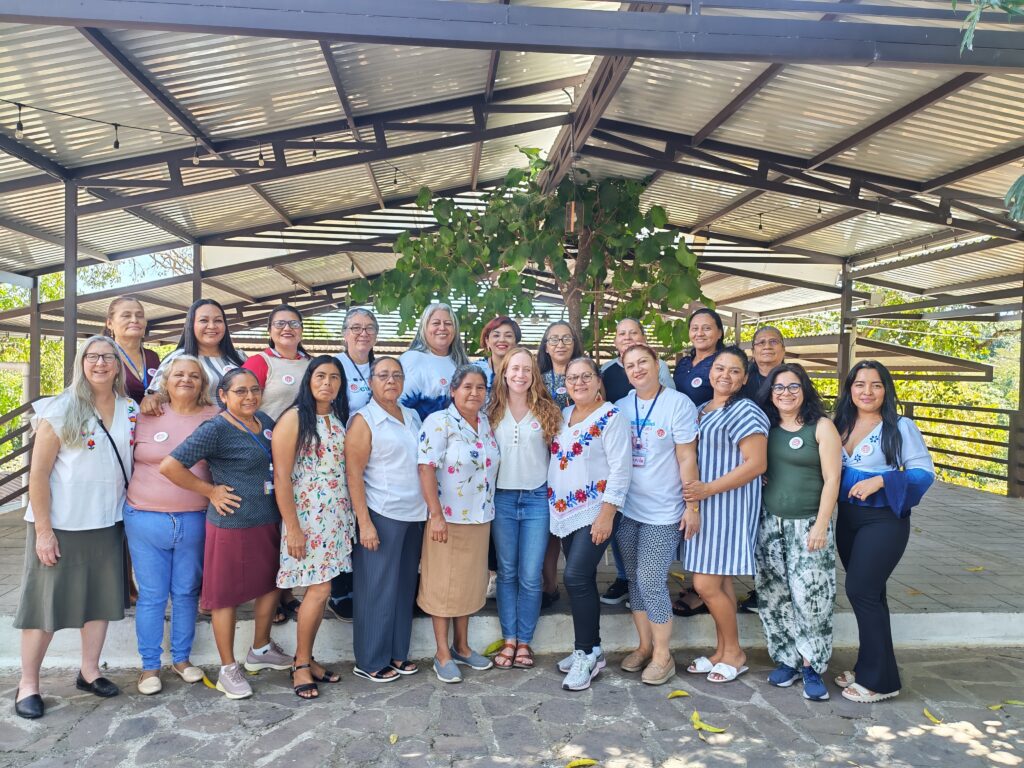
Each of the 24 community leaders who convened in El Salvador shared joys and challenges of both their small businesses and their home lives. Over lunch, Fidelina told me how she wished she had been able to study when she was younger, she would have liked to be a psychologist because she loved listening and giving advice. She told me how she studied alongside her children, borrowing their school books in the evening and copying the assignments the teachers left into her own notebook. Fidelina is a grandmother, but she hasn’t stopped dreaming, and she continues to build her business, help her neighbors, and serve as an inspiration to her family — all while holding up the invisible labor of running a home in rural El Salvador.
Through the ESPERA program — now with more than 1,400 participants in Mexico, El Salvador, Guatemala, Honduras, and Nicaragua — women are coming together and building relationships, strength, and a future for themselves and their families. Women don’t just share resources with each other, but also hold each other and listen, an act that is both cathartic and full of power.
At the end of this gathering in February, each woman was asked to express one word about how she was feeling. Renewed, hopeful, inspired, powerful. I left feeling grateful for all the women I met and for the incredible work that Mary’s Pence has done to build firm roots in the community. Together, I’m excited to see how we can grow.
“Casa de los Pájaros” – Home of the Birds, Santiago de Atitlán, Guatemala
In March, I had the privilege of visiting ESPERA participant Cruz in her home in Santiago de Atitlan, Guatemala, where she and her family weave textiles and traditional clothing. Cruz taught me that in the Mayan language Tz’utujil, the nickname for the town of Santiago is Tz’ikin Jaay, or “home of the birds.” The love of birds is reflected in the hand-embroidered huipiles, traditional woven tops that are part of the indigenous dress. As Cruz shared her story with me, her fingers moved nimbly across the fabric, embroidering the green feathers of a quetzal, the elusive national bird found in the forests around Santiago, if you know where to look. “We love birds,” Cruz told me. “We put them on everything.”
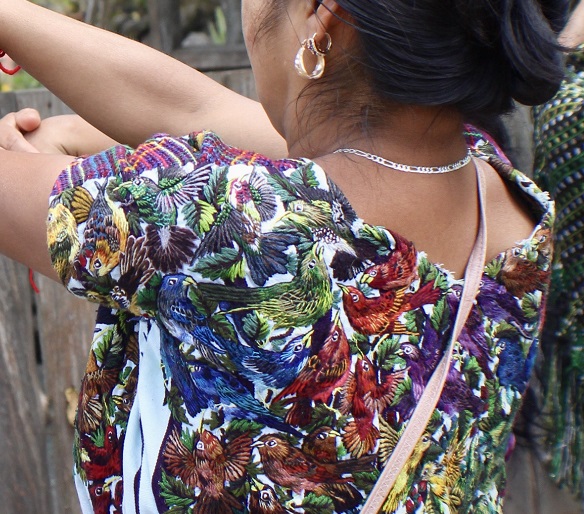
Santiago de Atitlán is the heart of the Tz’utujil community, a Mayan indigenous group that has proudly maintained its rich cultural heritage and language. Here, nearly 150 women in rural village collectives hold revolving loans from Mary’s Pence. These loans support a range of small family businesses, including weaving, agriculture, handicrafts, and food preparation, and have changed lives for women like Cruz.
Cruz joined Mary’s Pence partner organization, ADISA, when looking for support for her daughter, who has a physical disability that limited her ability to attend school. There she found the network of women who were part of the ESPERA program. Over the years, she has used loans to build her weaving business. Now she has a waiting list of clients because of the quality of her work. The support of the women’s collective has helped her keep going, even when things become difficult in her family and her personal life.
From Suchitoto to Santiago Atitlán, women balance the invisible weight of daily life with the work of leadership, entrepreneurship, and care. Through ESPERA, Mary’s Pence walks alongside them, providing support, connection, and resources, while trusting them to lead the change in their own lives and neighborhoods. Their courage, resilience, and creativity inspire me and remind me that when women are empowered, entire communities can flourish.