
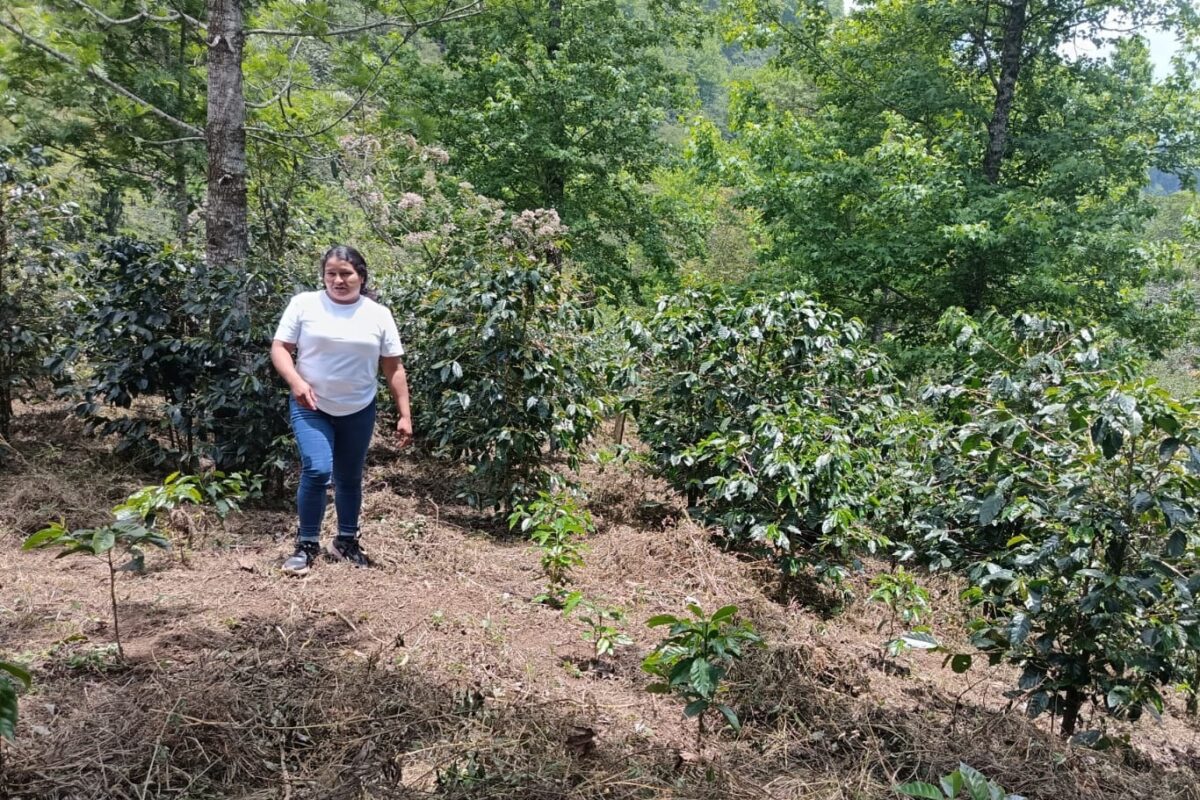
In many rural communities across Honduras and Central America, women live in deeply rooted patriarchal systems that shape nearly every aspect of life, from access to land and credit to education and decision-making. For women navigating these systems alone, the stakes are especially high.
Olga is one of them. As a single mother in a rural Honduran community, she carries the weight of being her household’s sole economic provider while also making every critical decision for her and her 14-year-old daughter’s future. “It often means a heavy emotional burden,” she shares. “Even so, I have managed to move forward thanks to my own effort and the support of my mother, who has been a great source of strength for me in the most difficult moments.”
Her motivation is her daughter. “My greatest dream is for her to have good health, real opportunities, and a better future. I was only able to complete high school because of the distance and costs, but I am determined to fight so that she can pursue a professional education.” With this in mind, she joined the Grupo de Mujeres Lenca, an Indigenous women’s collective of coffee producers in rural Honduras.
Before and After Mary’s Pence. A turning point
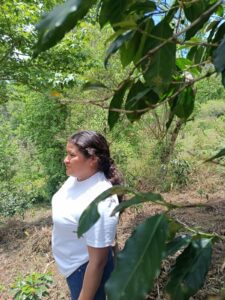 Olga had participated in other women’s development programs before, but she describes them as narrowly focused on economic inputs (access to credit or basic training) without addressing the broader picture of what women need to grow. What was missing, she says, was the combination of financial tools, practical skills, and emotional support that would allow her to see herself not just as a beneficiary, but as an empowered woman and leader. That changed when she joined Mary’s Pence ESPERA program.
Mary’s Pence gave Olga access to credit, technical training, ongoing emotional support and accompaniment, and crucially, it treated her economic and emotional development as inseparable. At the center of everything is a principle she has come to understand clearly through this journey: “If I am well, my daughter is well.” Caring for her own emotional health is inseparable from her role as a mother and a coffee producer.
On her coffee farm, she began using organic fertilizer techniques she learned through Mary’s Pence. The results were tangible: improved yields, stronger harvests, and a more stable contribution to her household income. This translates directly into greater support for her daughter’s education and healthcare.
But the transformation Olga speaks about most is internal. “The program strengthened my leadership in many ways,” she explains. “Today, I feel more confident and better equipped to support other women. Through the trainings and emotional support I received, I learned how to lead groups, share knowledge, and grow alongside other women leaders. That experience has been incredibly meaningful to me.”
One milestone she shares with particular pride is that she now owns land registered in her name. She owned a small plot of land, and through her hard work and a loan from Mary’s Pence, she purchased a second parcel to continue expanding her coffee production. In communities where women’s property rights are frequently limited or overlooked, this is not a small achievement; it represents a meaningful and lasting form of economic autonomy, one that the financial tools and confidence she gained through Mary’s Pence helped make possible.
Where She Is Now and Where She’s Headed
As a coffee producer, Olga is involved in every stage of production, from planting and harvesting to sales. Like many small-scale producers, she currently sells coffee in its raw form, which limits its value in the market. She and the women in her group dream of one day processing and exporting coffee under their own brand, gaining access to better markets, and receiving fairer compensation for their work.
For Olga, the path forward is collective, not just personal. “Organization is vital for women if we are to reach our dreams,” she says. “We live in rural communities where resources are scarce, where most women don’t own their land, and where patriarchy limits what we can do. But when we organize, we can become great leaders.” And she has, today, Olga is the group’s coordinator. In her role, she checks in on the other women in her collective to help them with their ESPERA loan, provide support and motivation, and work through challenges.
Olga is a natural leader, motivated by love for coffee, her community, and her daughter. Her story shows what becomes possible when women are given the opportunity to invest in themselves, their families, and their communities.