When Frances “Franco” Stevens came out as a lesbian in 1990, she searched for a magazine that could help her make sense of this new chapter. She was looking for stories and to see how other women like her were living their lives. When she couldn’t find it, she created it herself.
Curve magazine was born as a vital source of visibility and connection for lesbian and queer women. Today, its legacy continues through The Curve Foundation, one of Mary’s Pence grantees, which uplifts LGBTQ+ women and nonbinary people through storytelling, public dialogue, and community-building programs. Yet for many LGBTQ+ women and nonbinary people, access to affirming spaces and support networks remains limited. Some live in rural communities with few or no affirming resources, while others navigate family rejection and isolation.
Before formally launching its programs, The Curve Foundation’s founders traveled the country to hear directly from women. “What I heard then, I still hear now: I don’t see myself reflected. I don’t know where to find my people. I feel invisible. One young woman told us about how her mother said she would have aborted her if she had known she would turn out to be a lesbian.” This deep feeling of isolation made their mission even clearer. Representation matters. When people see their identities reflected in media, history, and community spaces, it affirms that they are not alone.
Building Visibility and Connection While Facing Financial and Cultural Challenges
In response, The Curve Foundation developed programs that expand visibility and connection through journalism fellowships, public conversations, digital storytelling platforms, and community events. Its Emerging Journalists Fellowship is helping to shape the next generation of LGBTQ+ storytellers, and this year, two fellowship alumni were named finalists for the 2026 Pulitzer Prizes: Catalina Gaitán for breaking news reporting at The Seattle Times and Salgu Wissmath for photojournalism at The Wall Street Journal.
In 2020, Franco Stevens’ story and the legacy of Curve magazine were featured in Ahead of the Curve, a documentary that introduced new audiences to the history and contributions of lesbian communities. The film was part of Netflix programming for some time, and is currently available on Apple TV. Today, nearly 10,000 people participate in The Curve Foundation’s Facebook group, and many more attend their free in-person and online events, forming a growing network of connection and support.
Creating these spaces requires resources, yet organizations serving queer women have long been overlooked by philanthropy. According to the latest data from Funders for LGBTQ Issues, only 1% of LGBTQ+ philanthropic funding supports lesbian and queer women-specific organizations. Franco expands, “Many funders care deeply about LGBTQ+ communities, but lesbian and queer women’s experiences are often treated as part of a larger conversation rather than something worthy of investment in their own right.”
In 2025, The Curve Foundation lost 90% of its corporate funding amid a broader retreat from diversity, equity, and inclusion commitments. “Those losses have made things financially challenging at the exact moment our programs are needed most,” Franco said.
Despite these challenges, the impact of the work is tangible. After the end of a 16-year marriage, Wendy found herself isolated and uncertain about rebuilding her sense of community. Through The Curve Foundation, she found friendship, support, and belonging.
At a Curve Foundation photo exhibition, Monica met people who would become lifelong friends. For the first time, she described feeling fully connected, supported, and proud of her identity.
Making Space for Joy
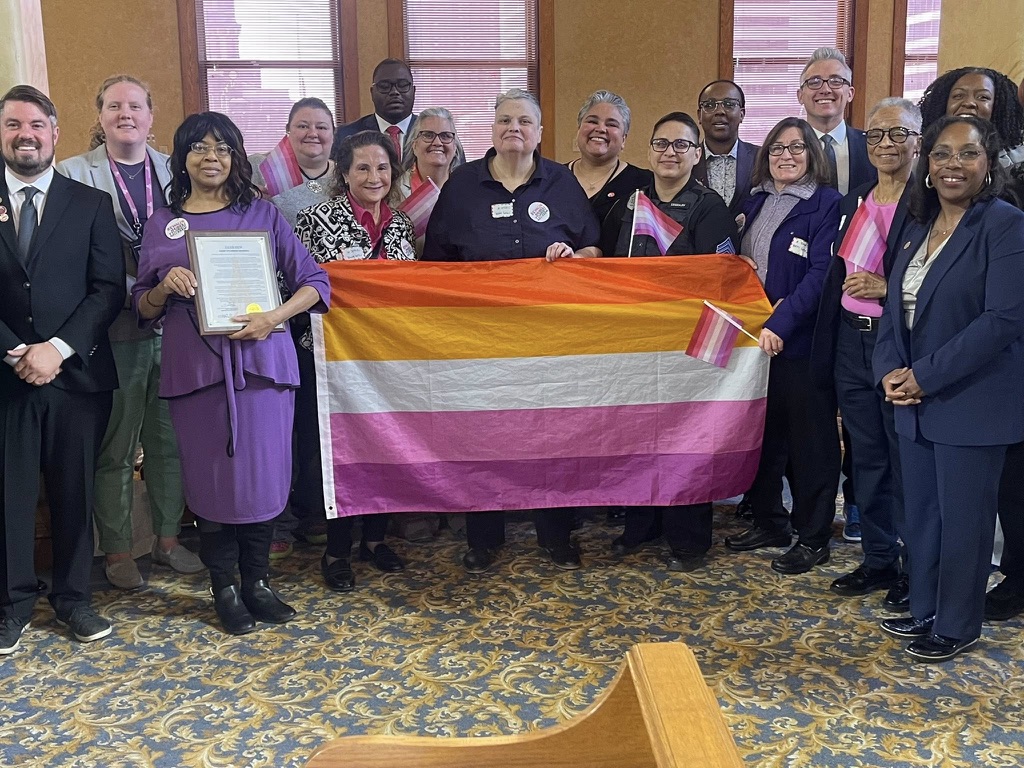
The Curve Foundation’s leaders see joy and celebration as just as essential as visibility in addressing isolation and loneliness. “We want to bring back the joy and the fun,” Franco said. During Lesbian Visibility Week each April, communities across the country gather for film screenings, educational events, flag raisings, and celebrations that foster connection and visibility. Festivities are a great opportunity to gather and laugh together.
Building community also requires organizational strength. Mary’s Pence supported The Curve Foundation during a pivotal moment by funding a staff and board retreat. This time allowed leadership to step back, reflect, and realign around mission and long-term strategy.
Investments like these are often less visible than public-facing programs, but they help organizations build the capacity needed to serve their communities over the long term.
“In a political atmosphere where the current administration actively promotes homophobia, transphobia, misogyny, racism, ableism, and ageism, many are experiencing acute isolation, fear, and a lack of positive representation in mainstream media and societal narratives. Everything we do supports LGBTQ+ women to promote self-acceptance and a sense of belonging in a world where we are not valued. We are planting seeds for changes within our own community, and in turn, the broader community,” Franco explains.
The Curve Foundation’s work demonstrates that something as simple as helping people feel seen, connected, and less alone can transform lives.