
Labor Day was created in 1894 to honor the contributions and power of working people who organized and advocated for safer, more just working conditions. More than a century later, the holiday still offers an opportunity to reflect on a basic principle: work should provide people with the means to meet their needs, build financial security, and live with dignity.
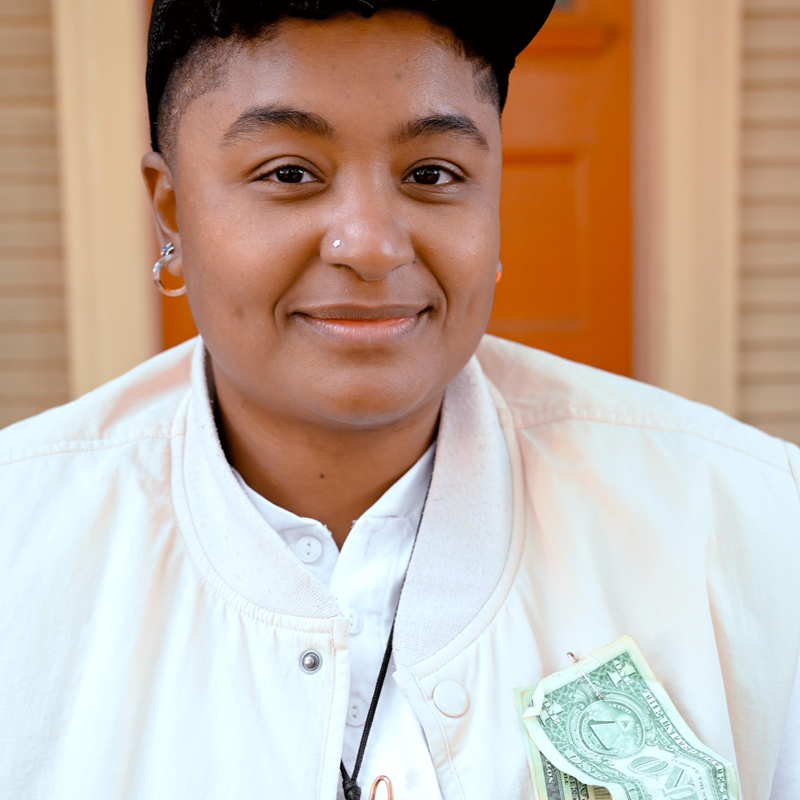
As Toya, Southern Project Hustle founder and coordinator, reflects, “Why are there workers who give so much of themselves to their jobs and still cannot make ends meet or build wealth for their families and future generations?”
Southern Project Hustle, a Mary’s Pence grantee, is putting these questions into action. The organization works with Black women, queer, and femme hustlers in New Orleans, community members who are street food vendors, artists, wellness practitioners, caregivers, and others earning income through the informal economy — often while working multiple jobs and caring for children, elders, or disabled family members. Together they are working towards a more just local economy.
When working hard is not enough.
In their November 2025 report, National Partnership for Women & Families shared that more than 591,000 Black women working full-time jobs in Louisiana earn a median annual wage of $26,777. This is 46 cents for every dollar a white man made. With rising costs of living, many women turn to their ‘hustles’ to try and build a better future for themselves and their families.
New Orleans has a long history of people creating businesses, mutual aid networks, artistic projects and other forms of community support with limited resources. Southern Project Hustle’s role is to build on that existing knowledge and creativity by listening to what people need and connecting them with resources and one another.
Southern Project Hustle‘s vision is connected to the larger economic life of New Orleans. The city generates enormous wealth mostly because of roe people’s unique culture and the exploitative labor of hospitality workers. Toya would like to see more of that wealth reach those people whose energy makes that economic activity possible. She envisions more investment in workers, small businesses, and communities so the people who help generate the city’s wealth can actually benefit from it.
In collaboration with Cooperation New Orleans, Toya is currently supporting Pagoda Café, a New Orleans café whose workers came together to purchase the business from the owner. Cooperation New Orleans supported them in securing a real estate and working capital loan.
As they continue to keep the day-to-day work of Pagoda Café moving, they are learning what it means to be both workers and owners. Southern Project Hustle supports them through listening practices by way of 1:1 conversations. These 1:1 conversations help Cooperation New Orleans better understand what’s needed to support Pagoda in making decisions collectively and creating terms of engagement that give them the best opportunities for success as worker-owners.
Rather than asking people to fit themselves into an economic system with a history of excluding and exploiting them, Toya sees the “hustle economy” as a potential pathway toward ownership, cooperation, and solidarity. The skills and resourcefulness people develop while piecing together income can become the foundation for something more sustainable.
The impact of Southern Project Hustle is visible in these growing connections. Toya has seen people grow their businesses, develop partnerships and find new ways to use their skills. One woman has been developing her graphic design skills into a business, while hair stylists who did not previously know one another have begun exploring ways to buy products together and save money.
For Toya, these connections are a source of hope. She has seen people who were in very difficult places begin to find new possibilities through their work, particularly through art-related projects. She sees people being honest about what they need and what they dream of building, then working together to make those things possible.
One woman’s journey toward a different model
One story that Toya believes captures this work is Ayanna, a clinical therapist who wanted to make mental health services more accessible to Black women who could not afford them.
Ayanna quickly ran into a difficult reality: providing affordable services was not financially sustainable. She eventually had to sell her home and step away from that work for a period of time.
Through her involvement with Southern Project Hustle, including political education and the Black Liberation Co-op Academy, she began exploring what collaborative work could mean for the direction she wanted to take. She even had the opportunity to pause and take care of herself. “I attended two of The Givers Revival Retreats with Southern Project Hustle, which gave me a chance to take a break when I needed it most,” shares Ayanna. Today, Toya says, she keeps trying to help women by finding ways to reach more people through public speaking about mental health and by collaborating with others toward that goal.
Labor Day reminds us that the conditions workers fought for generations ago are still worth defending and expanding today, while inviting us to think differently about the economy we are building and whether work truly gives everyone the opportunity to live with dignity, stability and hope for the future.