Have you ever been in a place where you felt like you didn’t belong? What if you had to be there every weekday for 12 years? For many Asian American students, this is a reality, and Asian American Voices for Education (AAVEd) is working to change that.
In May, as we celebrate Asian American, Native Hawaiian, and Pacific Islander (AANHPI) Heritage Month and recognize the vital role of educators during Teacher Appreciation Day, we are proud to highlight Mary’s Pence grantee partner AAVEd. Their work uplifts teachers while ensuring students see themselves reflected in what they learn.
Founded in 2021 by a group of Asian American mothers in the aftermath of the Atlanta spa shootings, AAVEd emerged from both grief and a clear conviction: “as our communities tried to make sense of this stunning act of violence, punctuating the rise of anti-Asian sentiment on a national level during the COVID-19 pandemic, many started to identify a glaring gap in our state’s school system. While Asian Americans have seen the largest population growth in Georgia since the 1990s, their stories are all but absent in the classroom, leading to poor support for Asian American students and a lack of understanding among their peers, teachers, and school leaders,” shared Melissa, Operations Associate at AAVEd.
Why are Asian American stories nearly invisible in our classrooms?
AAVEd’s work responds directly to this question. At its core, the organization is not only addressing curriculum gaps but also fostering representation and belonging. Many Asian American students grow up feeling caught between worlds, rarely encountering stories that reflect their own experiences, an absence that can contribute to isolation, bullying, and a diminished sense of self.
At the same time, leaving these histories out of classrooms limits everyone’s understanding of the American story. As Melissa explains, “Asian American histories are deeply intertwined with major issues that continue to shape our country today — from immigration and citizenship to race and identity. When we teach this history, we’re not adding something extra — we’re helping students understand a fuller, more connected American story.”
Through its work, AAVEd helps students and educators build a deeper, more complete understanding of history that reflects the complexity of the communities around them.
Bringing AANHPI Heritage Month into the Classroom
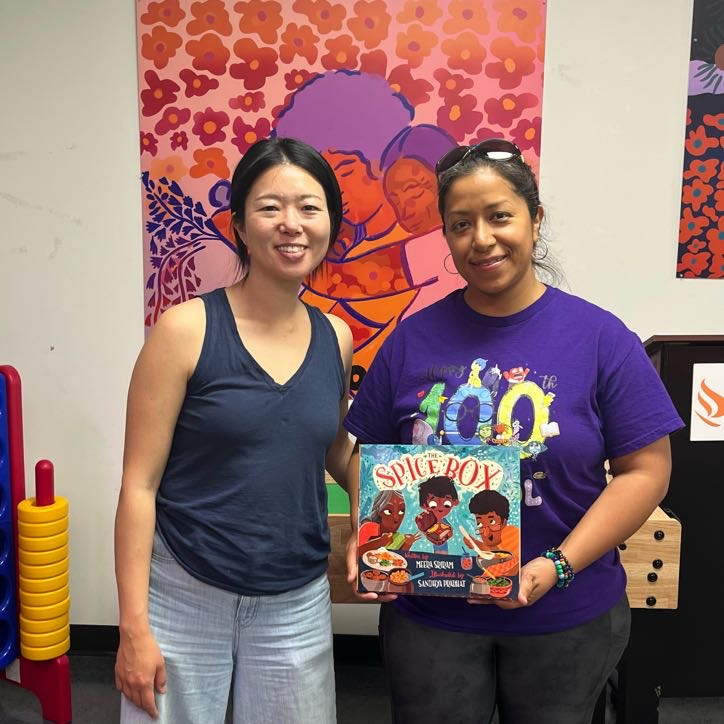
One of AAVEd’s most impactful initiatives is its Asian American, Native Hawaiian, and Pacific Islander Heritage Month Kits, now in their fourth year. Offered free to K–5 classrooms across Georgia, each kit includes a children’s book, lesson plans, activities, and educator resources to help teachers integrate Asian American history. Developed with curriculum experts and featuring local artists like Tiffany Chau, the kits combine storytelling and art to make learning engaging while fostering cultural understanding and empathy. With support from Mary’s Pence, AAVEd has expanded this work — growing both in-person events and digital engagement to reach broader audiences seeking inclusive educational resources. This year, over 700 kits were distributed, reaching more than 15,000 students across Georgia.

Supporting Teachers in Challenging Times
AAVEd’s work is also deeply connected to the realities teachers face today. Like much of the South, Georgia has been at the forefront of some of the most troubling trends we see today in the field of education, namely the widespread attacks on Diversity, Equity and Inclusion (DEI).
As early as 2022, the “divisive concepts” law prohibited teachers from teaching about topics related to race and racism, on the basis that it might make students uncomfortable. This vaguely worded policy has created a minefield for teachers, where pressure or a lack of support makes it difficult to understand what they are allowed to teach without fear of losing their positions.
For many teachers — nearly 80% of whom are women — these pressures create a disconnect between their passion for education and the constraints of the system, contributing to high rates of burnout, leading them to leave and pursue other career paths.
AAVEd works directly with teachers to develop strategies for integrating diverse perspectives into the classroom, while also working at the systems level to advocate for a more inclusive curriculum that supports teachers in teaching not just Asian American history but the histories of all communities.
One educator who participated in AAVEd’s training described the experience as transformative: “As a Latina educator who grew up in Georgia, I had never experienced professional learning grounded in ethnic studies before. This space was not only informative but also inspiring and healing. For the first time, my own identity and lived experiences were centered rather than marginalized. It gave me the confidence to bring that into my classroom, where my students can now explore identity, belonging, and community in ways that truly reflect who they are.”
With that support, she developed lessons using popular culture as an entry point—connecting themes of family, identity, and community across cultures. Her classroom became a space where students could see themselves reflected and begin to understand one another more deeply.
Mary’s Pence is proud to support AAVEd as part of its commitment to grassroots organizations advancing justice and long-term systemic change.