
Reflections from the 2026 Mary’s Pence Grantee Gathering
By Anisa Hajimumin
When Comfort Dondo, Founder and Executive Director of Phumulani: African Women Against Violence, invited me to accompany her to the 2026 Mary’s Pence Grantee Gathering, I thought I knew what awaited me. What I did not expect was to leave with a renewed sense of hope.
Before the gathering began, Mary’s Pence team made participants feel welcome. From the thoughtful communication leading up to the event to the seamless coordination at Mount Olivet Conference and Retreat Center in Farmington, every detail reflected care. An atmosphere of kindness settled over the waiting area, quietly reminding each of us that we belonged.
Conversations flowed naturally across tables as people from different communities and different corners of the country discovered that; despite our diverse backgrounds, we carried many of the same hopes for the people we served. Later that evening we participated in the Story Stitch Circle, a beautiful activity created by Green Card Voices. The exercise invited us to share pieces of our personal stories through simple conversation. By the time we gathered around the outdoor fireplace to enjoy s’mores beneath the evening sky, something remarkable had happened; the distance between strangers had disappeared and a community had begun to take shape.
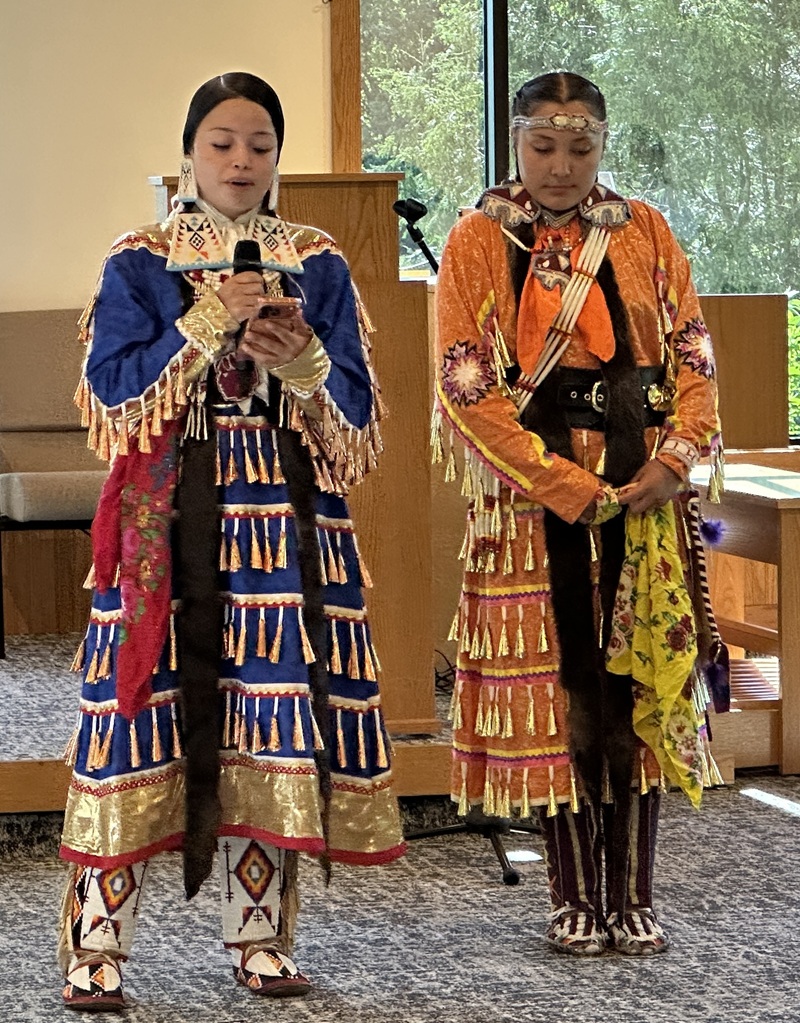 The following morning offered one of the most moving experiences of the gathering: Caylee Martinez, Jada Steidley, and Tarah White Eagle of The Kind Hearted Women Society and Wambli Ska Society opened the gathering with sage and prayer and a healing jingle dress dance, teaching us the history behind every gesture. Sitting quietly, I found myself reflecting on the many histories that shape our nation: the resilience of Indigenous peoples, the painful legacy of slavery, the journeys of immigrants and refugees, and the countless struggles for justice that continue today.
As the day went on, it became clear to me that every single organization represented at that gathering was doing the same impossible thing that Phumulani does: showing up, again and again, for communities that the rest of the world too often overlooks.
Jasmine Brett Stringer stood before us and named plainly what so many of us in this work carry silently: the exhaustion of believing we must hold everything together, and the toll that belief takes on our bodies and spirits. Mabel Martínez Arriaga spoke about ESPERA, Mary’s Pence program for women’s economic empowerment in Central America and Mexico. Georgia Black Doula Network’s film on Black doula care and Dr. Leslie Farrington’s workshop on the Black Coalition for Safe Motherhood’s ACTT curriculum stayed with me long after the room emptied.
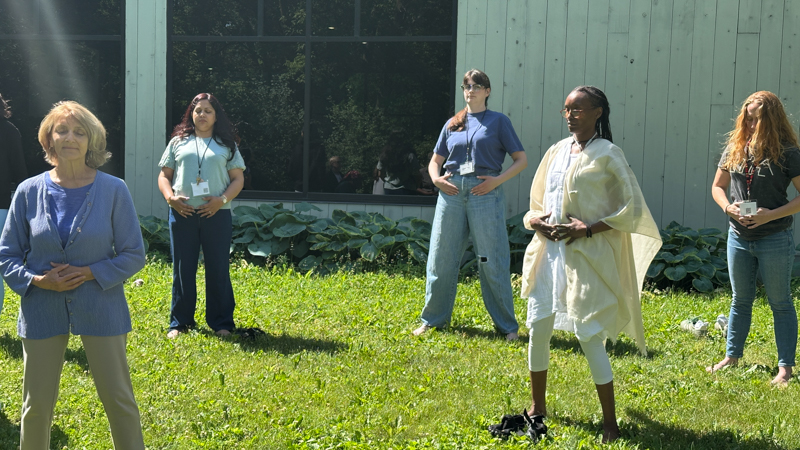 Laurie Ellis-Young taught us something as simple and profound as how to breathe, as if even that most basic act needed to be reclaimed after years of doing this work at a relentless pace. By the time Rhonda Rios Kravitz, Mary Stokke Vides, and Elvira Alonso of Sacramento Poderosas closed the gathering with an invitation to draw our own stories, no right answer, no wrong answer, only image, color, and whatever truth wanted to emerge.
I sat with the paper in front of me and began writing a poem, trying to capture Phumulani and the meaningful work it carries. I wanted to honor the connections I had built with my sisters from the North Carolina Hmong Association Women and Asian American Voices for Education. I was surrounded by leaders who had spent three days teaching one another, nourishing one another, and holding space for each other’s grief and hope in equal measure.
What I felt was something I can only describe as awe. Not admiration from a distance, but an awe from within, an awe that comes from realizing I was one small part of a room filled with people doing this work with such fierce, humble, and unwavering love.
By the end of the first full day, I realized I was no longer attending a conference.
I had become part of a family.